


Dear Becoming Ones,
I am writing from Cork, Ireland, where I have been for a spell eating with strangers and conducting ethnographic research around belonging and freedom through the shared practices of eating together. Over the past several weeks, I have stayed in homes, guest rooms, tiny flats, and community spaces, carried by extraordinary hospitality and kindness. Every place I have visited throughout Europe has had its own local pub ecology, its own rituals of gathering, its own choreography of conversation, laughter, and grief.
Last year, I was invited to Zürich to present a paper on my first book, Activist Theology, and once folks learned I would be in Europe for an extended period of time, invitations began to flow into my inbox. Scholars, organizers, pastors, artists, and ordinary people opened their homes to me so I could continue the research for the next book I am slowly writing: a project circling belonging and freedom through food, art, and ritual.
I remain deeply grateful for the support of Our Collective Becoming — both the Substack and the nonprofit. What began as a small experiment in public theology and correspondence has become a global ecology of care, with living projects emerging in various corners of the world. I do not take this lightly. Thank you for helping nurture this unfolding work.
For a long time, I have not known how to cultivate meaningful dialogue with paying subscribers. I am, at my core, a writer who observes the world and attempts to tell the truth about what I encounter: injustice, supremacy, fragmentation, loneliness, the collapsing architecture of empire, and the fragile beauty that still insists on living beneath it all.
Early in my academic career, after completing years of training and entering the progressive Christian speaking circuit, I found myself repeatedly tokenized as the “Trans voice” or the “queer perspective” invited into rooms that often did not know what to do with me beyond symbolism. Over time, I learned that I do not particularly enjoy performing expertise from a stage. I much prefer sitting at tables with people, listening carefully, asking questions, sharing meals, and allowing conversation itself to become a form of collective inquiry.
So while living in Nashville years ago, I began turning toward story and narrative intelligence as methodology. I started hosting conversations as content. That practice eventually took me across the United States by train, eating with strangers as a way of studying social trust, belonging, and repair. Now, it has carried me throughout Europe, where I continue asking the same driving question:
How do we turn toward one another right now?
That question feels more urgent to me than ever.
In Zürich, one of the things I learned is that nearly every worldview — every ideology, every system of meaning — is often structured around polarization and othering. We define ourselves against someone else. That realization saddened me deeply. I continue wondering whether we can recover a shared sense of dignity and purpose with one another without collapsing into sameness or domination.
While in London, being hosted by Black Pentecostal communities and Afro-Caribbean elders, I learned more about the art of listening. Truly listening. Not listening in order to reply, but listening as a spiritual discipline. I find myself speaking less these days and writing more carefully, hoping the words themselves might dance a little on the page.
I have also been carrying James Baldwin with me everywhere I go. Reading Baldwin while living between places has sharpened my awareness that I am, in many ways, living in exile from the nation-state that formed me. Baldwin has become a companion in grief and clarity alike, helping me turn away from the hegemonic structures that conditioned me and toward the vocation of becoming a cultural worker in an age marked by violence, genocide, loneliness, and profound spiritual exhaustion.
This fall, I plan to host a course situated at the intersection of my first book, Activist Theology, and Dr. Hanna Reichel’s Emergency Devotion. I want us to cultivate practices sturdy enough for the times we are living through — practices capable of nurturing ecologies of change, collective resilience, and generative relations. I am still building the course material now, slowly and intentionally. More details and a video announcement will arrive later this summer.
For those who are newer here, I wanted to connect a few dots.
Every Monday, I send a meditation meant to help us center ourselves amid the noise and velocity of the world. Every Friday, I send a Care Package focused on possibility. Last year, I spent an entire year writing about care because I remain convinced that care is not sentimental; it is infrastructural. It is political. It is spiritual labor.
I try to place care into everything I create, though I am imperfect and continually unraveling from the white supremacist practices and imperial logics that shape all of us in ways both visible and subtle. We are each compromised by the worlds that formed us. Even our goodness can become performance if we are not careful. “Good” itself feels increasingly contested in this historical moment.
What does it mean to become human together again?
That is the question underneath almost everything I write.
I also want to say clearly: my desire is for this work to remain publicly accessible. Every post stays free for two weeks before moving behind a paywall. I know this is not the best business model, but I continue to believe public thought and cultural work should remain available to as many people as possible.
For those who choose to become paying subscribers, thank you. Your support helps sustain this wandering, writing, listening life. It allows me to continue traveling, hosting conversations, writing publicly, supporting the nonprofit, and building spaces for collective reflection and repair. I never want this space to feel extractive or transactional. Think of a paid subscription less as purchasing content and more as helping keep a table open where these conversations can continue unfolding.
And because targeted harassment shaped much of my life for many years, comments remain open only to paying subscribers. This boundary protects my mental health and allows conversation to remain slower, gentler, and more intentional. Thank you for understanding this act of care.
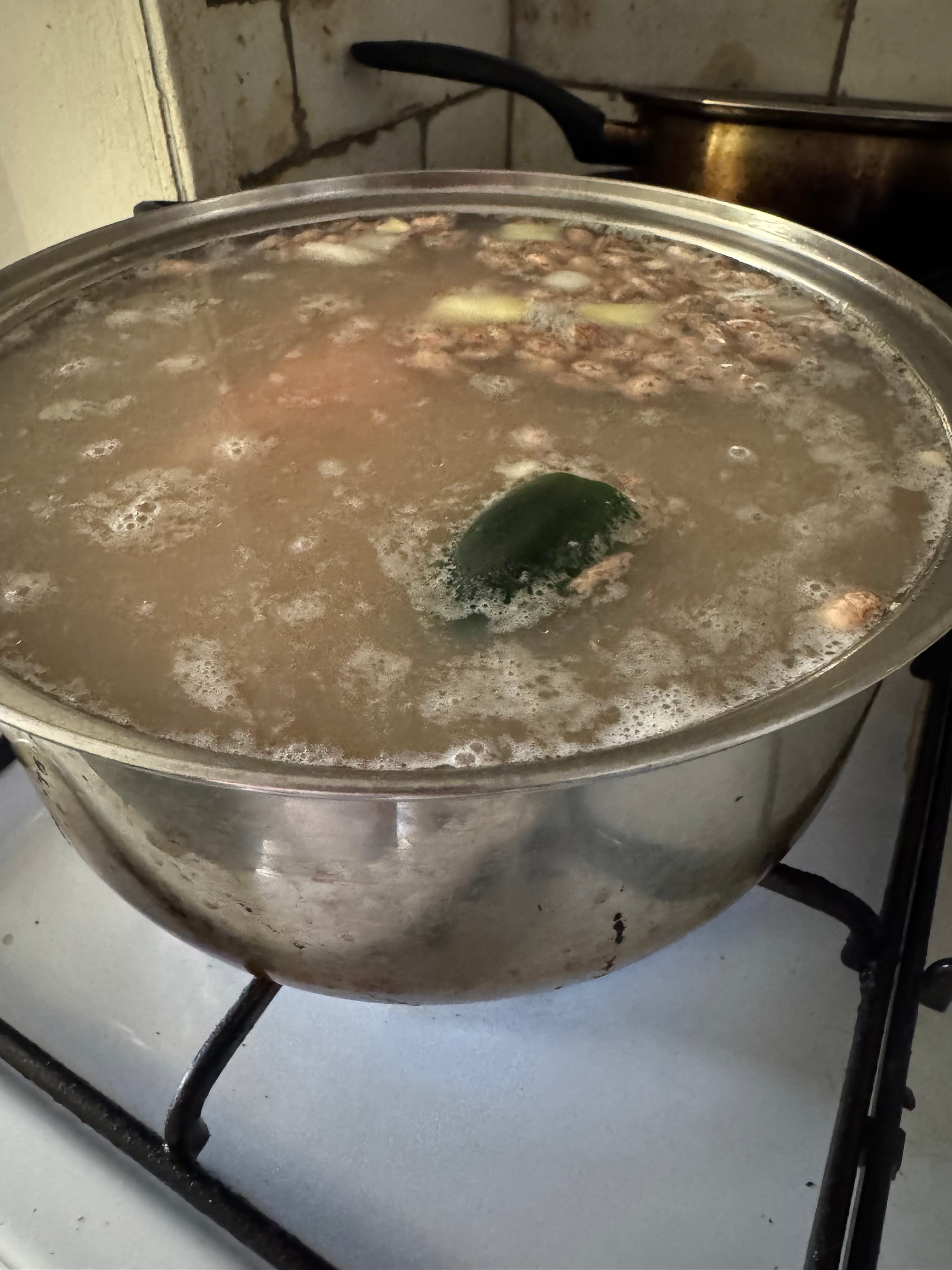
Today in Cork, where it is unexpectedly hot, I am cooking beans for dinner. I tend to eat simply while traveling, sharing meals in homes and resisting the pressure to constantly consume experiences. Though I will admit: I recently revisited a pizza spot here connected to memories of writing Activist Theology, and I have happily sampled my fair share of Irish whiskey and local beer while wandering both the Republic and the North of Ireland.
I miss my whiskey dates back in Alfred, and I am already looking forward to eventually returning to Alex’s for another evening of conversation and slow laughter.
Until then, thank you for being here.
Thank you for reading.
Thank you for helping nurture Our Collective Becoming.
Paz,
Roberto+
